VLSM Calculator
Use our Variable Length Subnet Masking (VLSM) calculator to make subnetting quick, accurate, and efficient.
Save IP space
Boost performance
Improve security
Ease network management
What Is a VLSM?
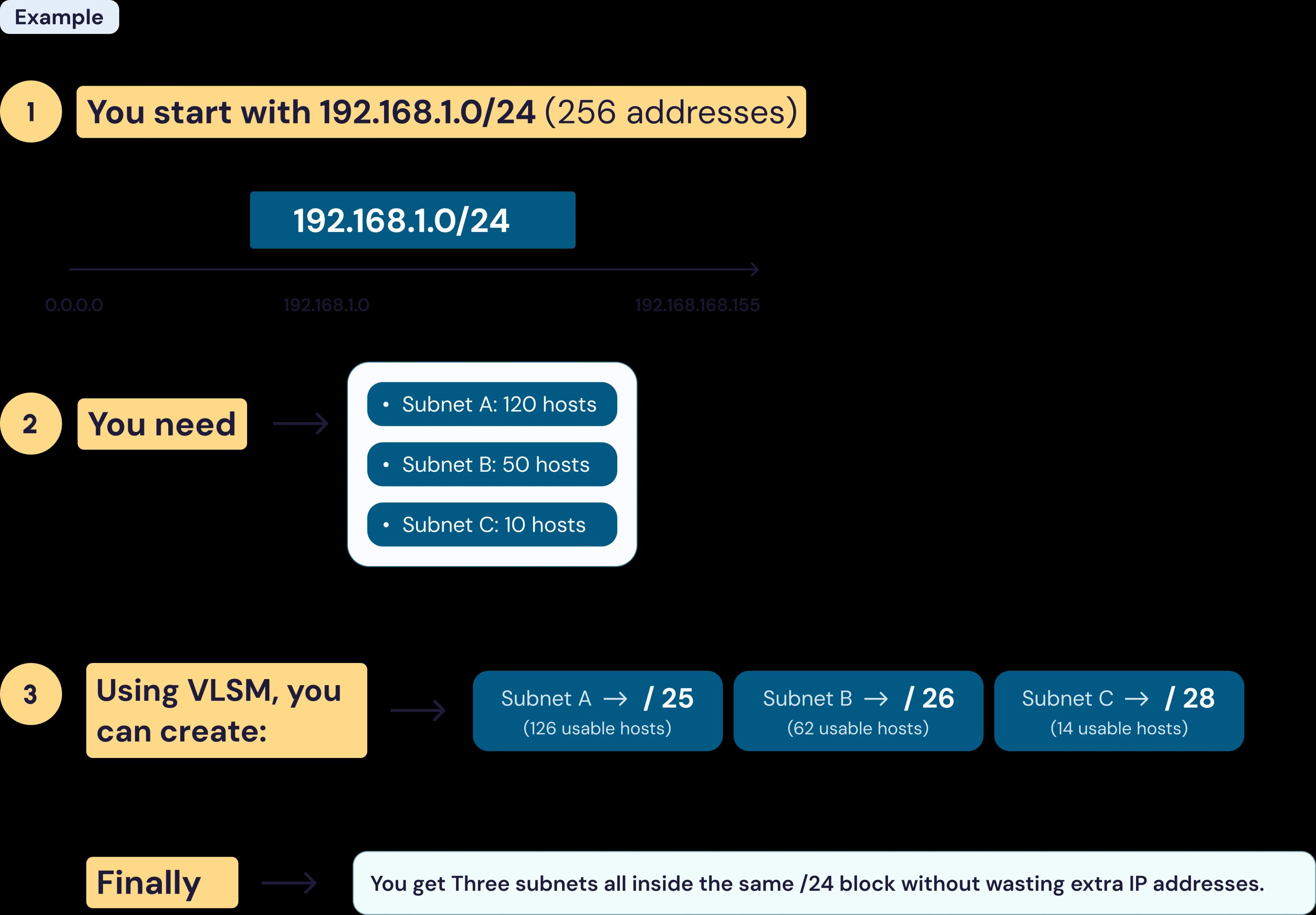
VLSM (Variable Length Subnet Masking) is a method of dividing a network into smaller sub-networks (subnets), where each subnet can have a different size depending on the number of devices (hosts) it needs.
In old (classful) subnetting, all subnets had to be the same size. Now, with VLSM, you can use different subnet masks (different lengths) for different subnets
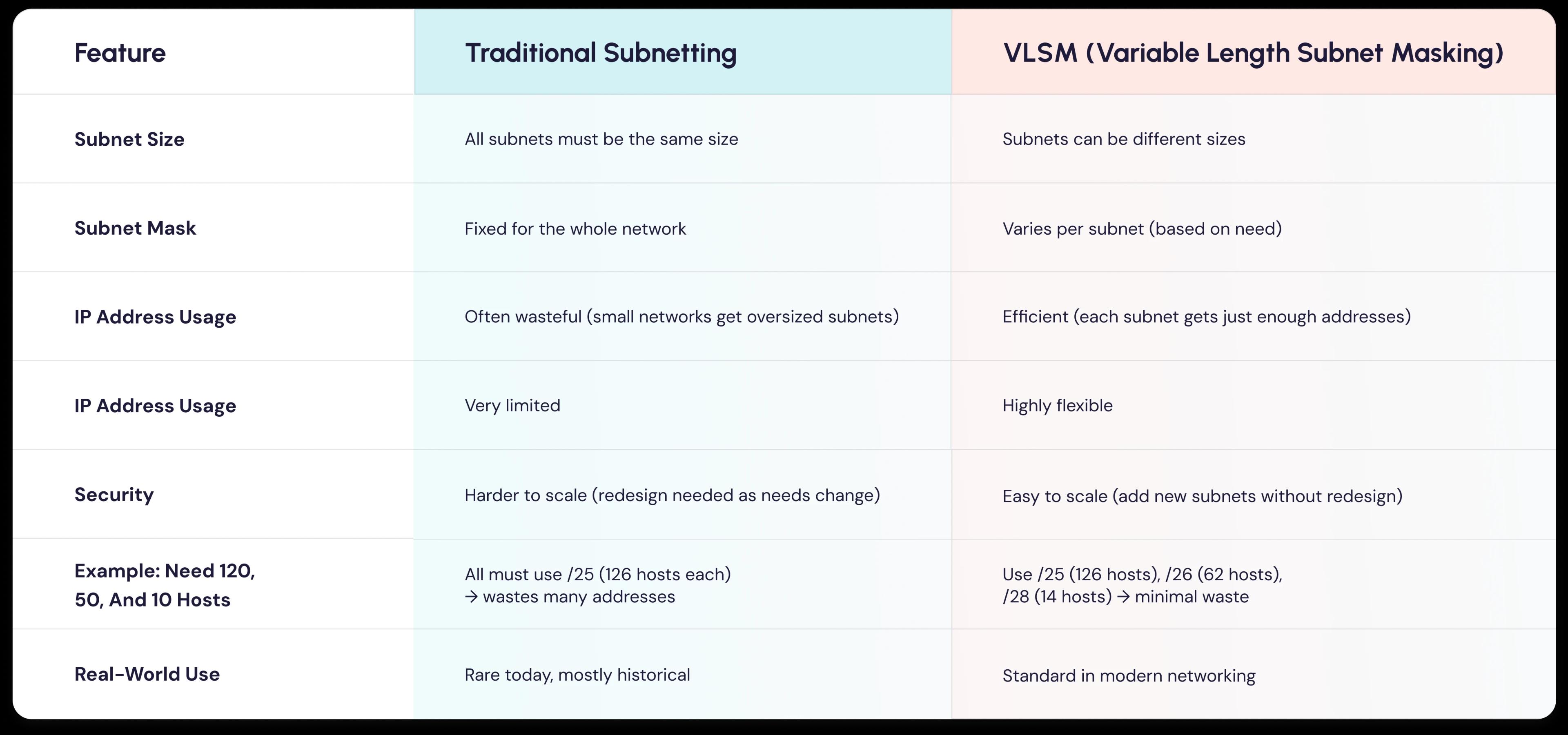
Traditional Subnetting vs VLSM
Traditional subnetting operates in a one-size-fits-all format, which wastes IP addresses.
VLSM is tailor-made subnetting that results in efficient, flexible, and scalable IP address management.
5 Cases When You Should Use VLSM
When You’re an ISP or Large Enterprise
Internet Service Providers and big companies often split address blocks among many customers or departments. During this process, VLSM ensures no overlap occurs and provides maximum efficiency.
When You Have Limited IP Addresses
If you’re working with private IPv4 ranges (192.168.x.x, 10.x.x.x, etc.) or a small block from your ISP, VLSM helps avoid wasting addresses.
When Different Parts of the Network Need Different Sizes
Instead of giving everyone a “one-size-fits-all” subnet, you assign exactly what each group needs.
Example
Servers need 100 IPs
HR needs 10 IPs
Guest WiFi needs 50 IPs
When You Want an Efficient Network Design
VLSM lets you break down a large block (/16 or /24) into just the right number of subnets. This way, you keep things tidy and scalable.
When Reducing Broadcast Traffic Matters
Large networks with too many hosts in one subnet can slow down because of broadcast noise. VLSM lets you break them into smaller, quieter subnets, reducing broadcast traffic.